Featured
Danish Folk Tradition
A Beloved queen
Queen Dagmar was born Margrete, a Bohemian princess, and came to Denmark to marry King Valdemar II in 1205. Her Danish name is remembered as Dagmar, often understood as a bright, day-like name, and the legend that grew around her made that brightness part of her identity.
Very little contemporary evidence survives about Dagmar as a person. What endured instead was a powerful public memory: a young foreign queen imagined as beautiful, gentle, merciful, and unusually close to ordinary people.
The Morning Gift
According to tradition, King Valdemar offered Dagmar a morning gift following their wedding. Rather than ask for jewels or wealth, she is said to have requested the release of prisoners and relief for struggling farmers. Whether remembered as history or shaped by generations of storytelling, the tale reflects the qualities people admired most in their queen: compassion, generosity, and a concern for ordinary people.
Historians believe the release of Bishop Valdemar of Slesvig was influenced by a complex mix of politics involving the Danish crown, the papacy, and rival claims to power. Even so, the ballads chose to remember Dagmar's kindness, and that enduring memory became one of the defining chapters of her legend.
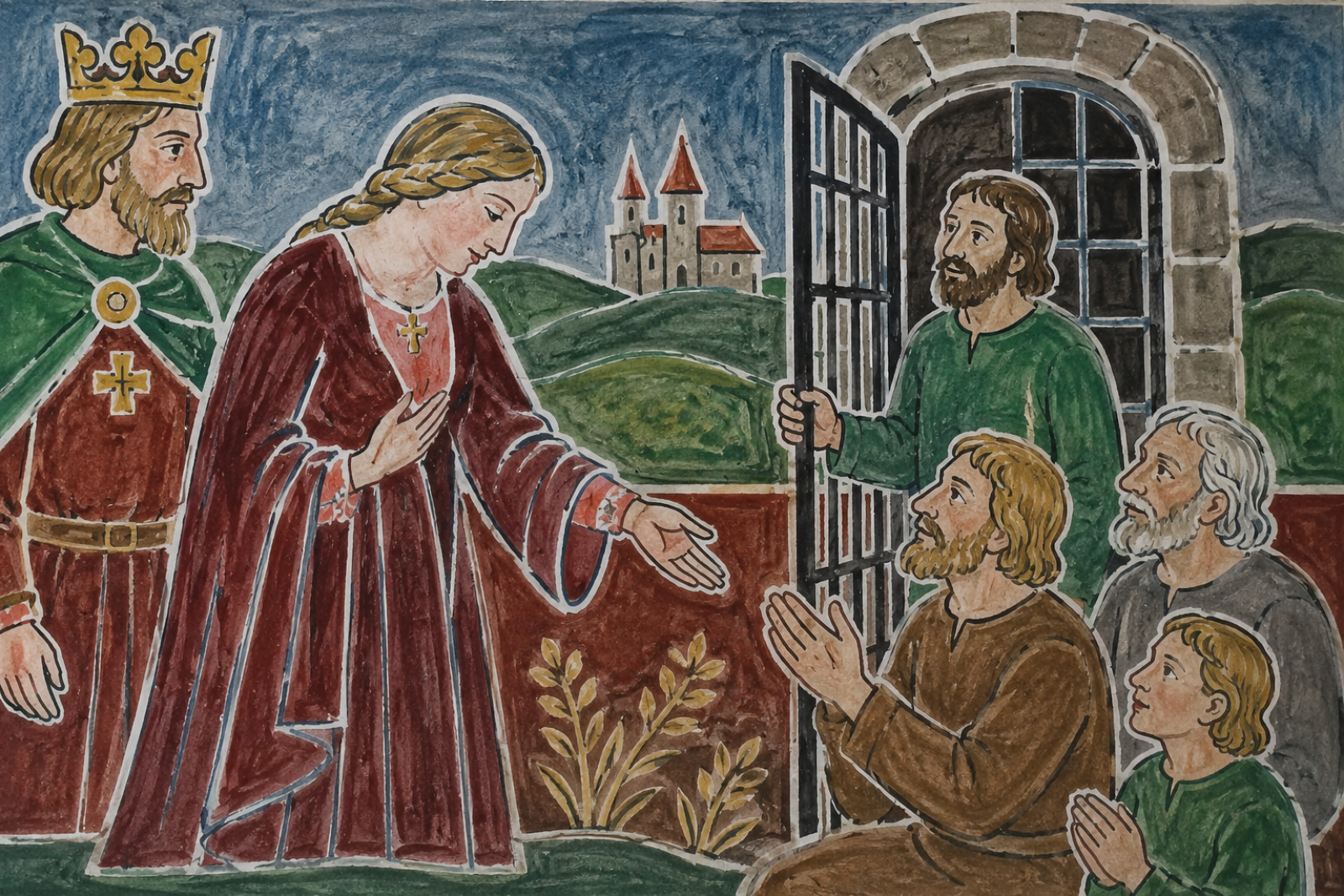
Dagmar's story is remembered through places, gifts, songs, and family tradition.
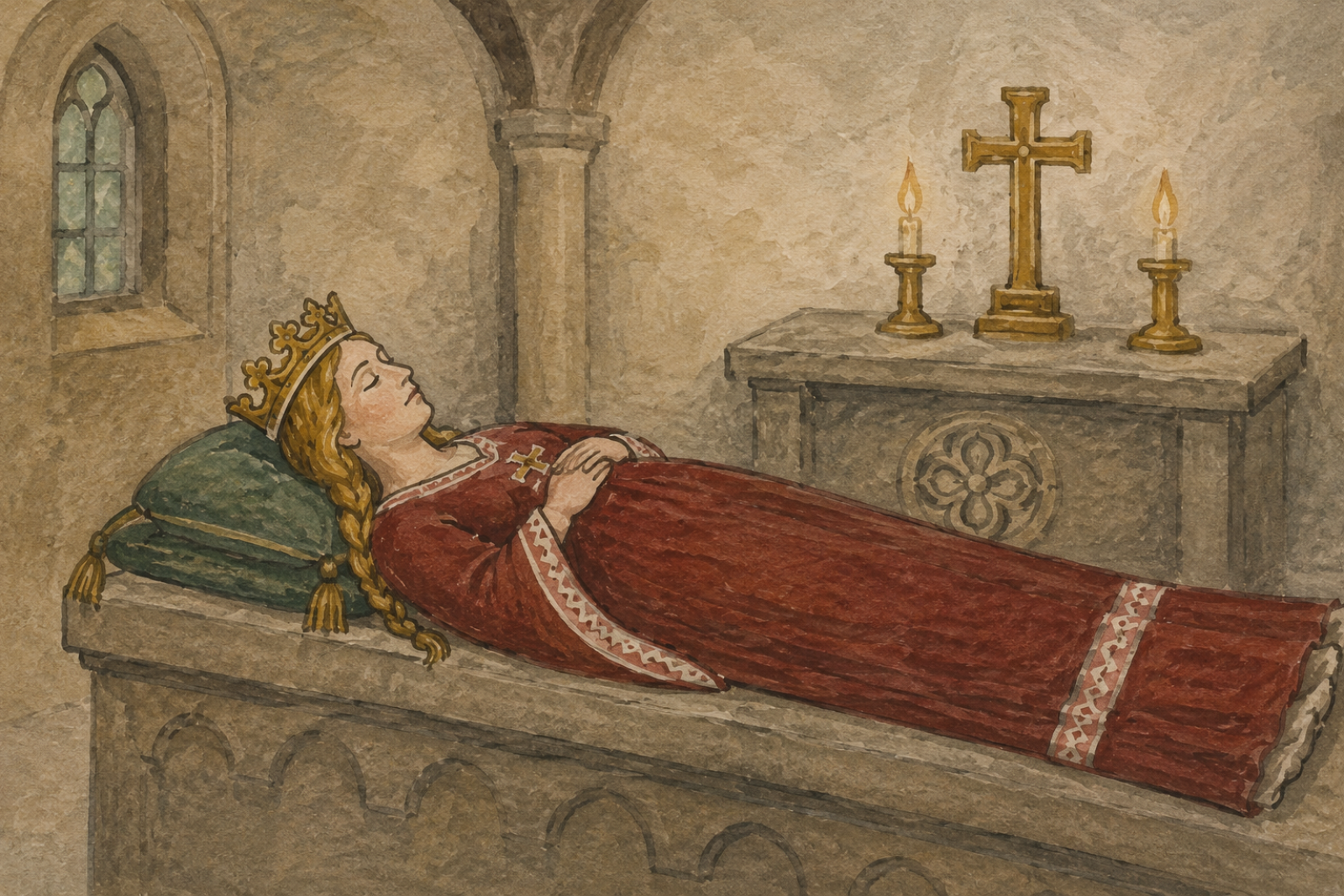
Queen Dagmar died around 1212 or 1213
Loss and Burial
Queen Dagmar's life in Denmark was brief. She died around 1212 or 1213, likely in her early twenties, after only a few years as queen. Later ballads remember her death in childbirth, adding another layer of tenderness to the compassion already associated with her name.
She was laid to rest in St. Bendt's Church in Ringsted, where her memory continued to grow long after her lifetime. Over the centuries, her tomb became linked with the story of the Dagmar Cross and the enduring image of a queen remembered not for conquest or power, but for kindness.
Ballad and Identity
The Queen Dagmar remembered today is as much a figure of memory as of history. While contemporary records tell us relatively little about her life, Danish ballads written down in the sixteenth and seventeenth centuries gave her story new life. Those songs transformed a medieval queen into a beloved symbol of compassion, humility, and grace, qualities that generations of Danes admired and chose to pass along.
As the stories spread, Dagmar became more than a royal figure. She represented an ideal of kindness expressed through everyday acts of mercy, concern for ordinary people, and quiet strength during difficult times. Whether sung around family tables, printed in books, or taught in schools, the ballads ensured that each new generation encountered not only a queen, but a set of values that came to feel deeply Danish.
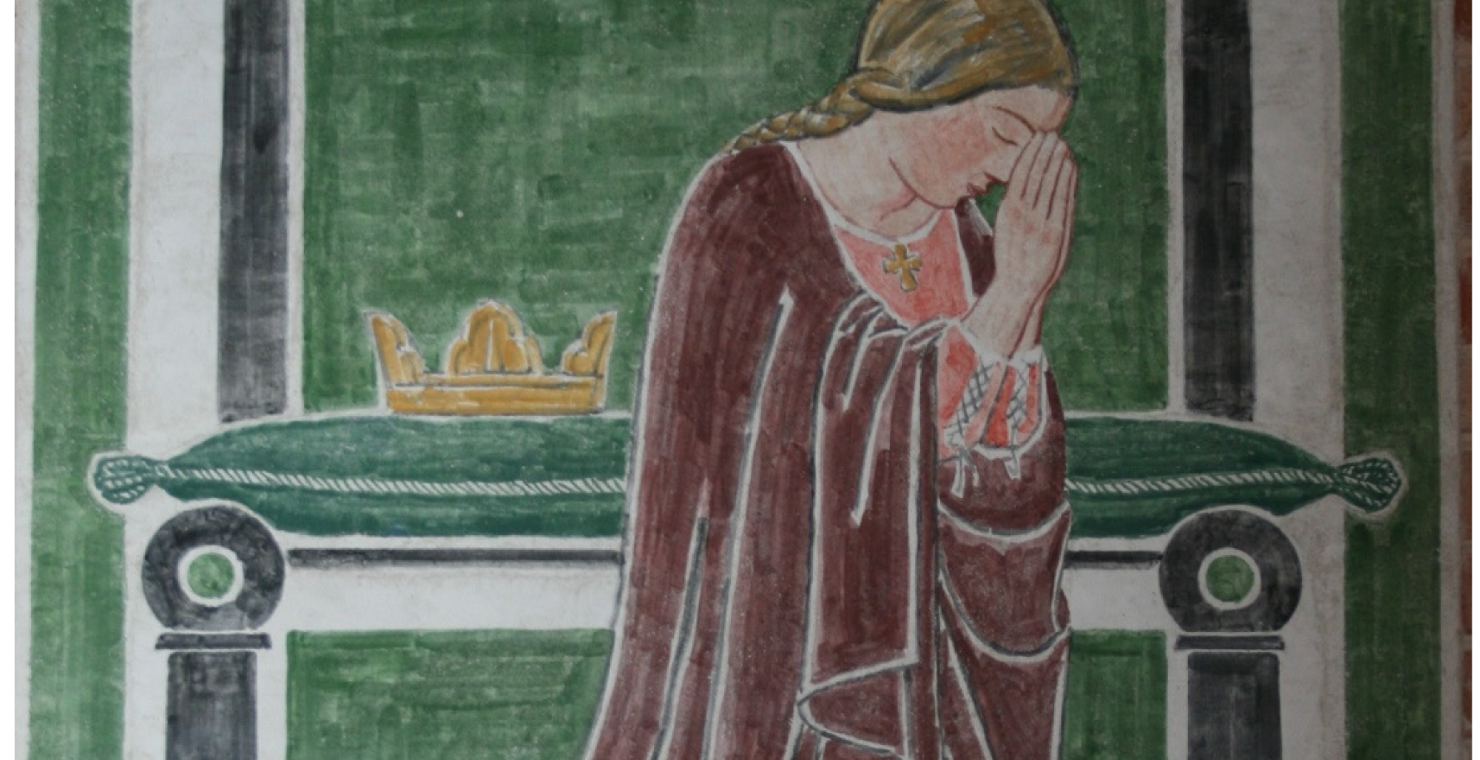
Her influence continued long after the Middle Ages. Artists, writers, composers, and sculptors returned to her story again and again, each finding new meaning in her life. In Ringsted, twentieth-century memorial art even portrays Dagmar in a posture of prayer, reflecting the affection and reverence she inspired. Although she was never formally recognized as a saint, the image reveals how deeply her story had become woven into Denmark's cultural memory.
Queen Dagmar reminds us that history is not remembered through dates alone. It survives because people continue telling stories that express who they are, what they value, and the kind of future they hope to build. In that way, her legend has become part of Denmark's identity for more than eight hundred years.
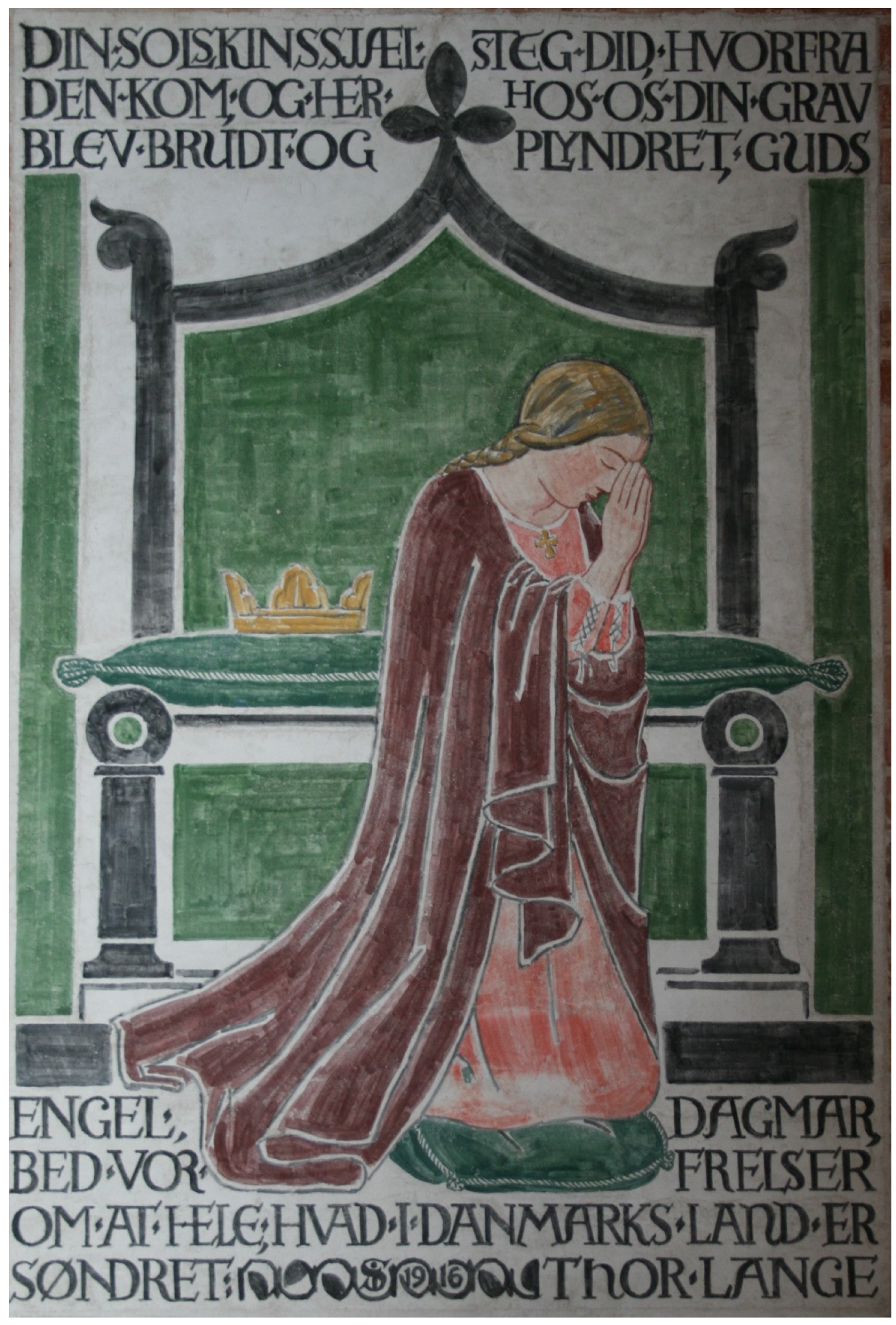
The Ringsted memorial image presents Dagmar in prayer, with the cross visible at her neckline.
The Dagmar Cross
The object now known as the Dagmar Cross was found in 1683 in a royal grave at St. Bendt's Church in Ringsted. Whether it truly belonged to Queen Dagmar cannot be proven, but popular tradition attached the cross to her name so strongly that the uncertainty became part of the story.
The original cross was a gold and enamel reliquary-style object with Byzantine imagery. One side shows Christ on the cross; the other includes holy figures traditionally identified with Mary, John the Baptist, Basil, and John Chrysostom. The cross became a small object carrying a large mix of faith, monarchy, memory, and family tradition.
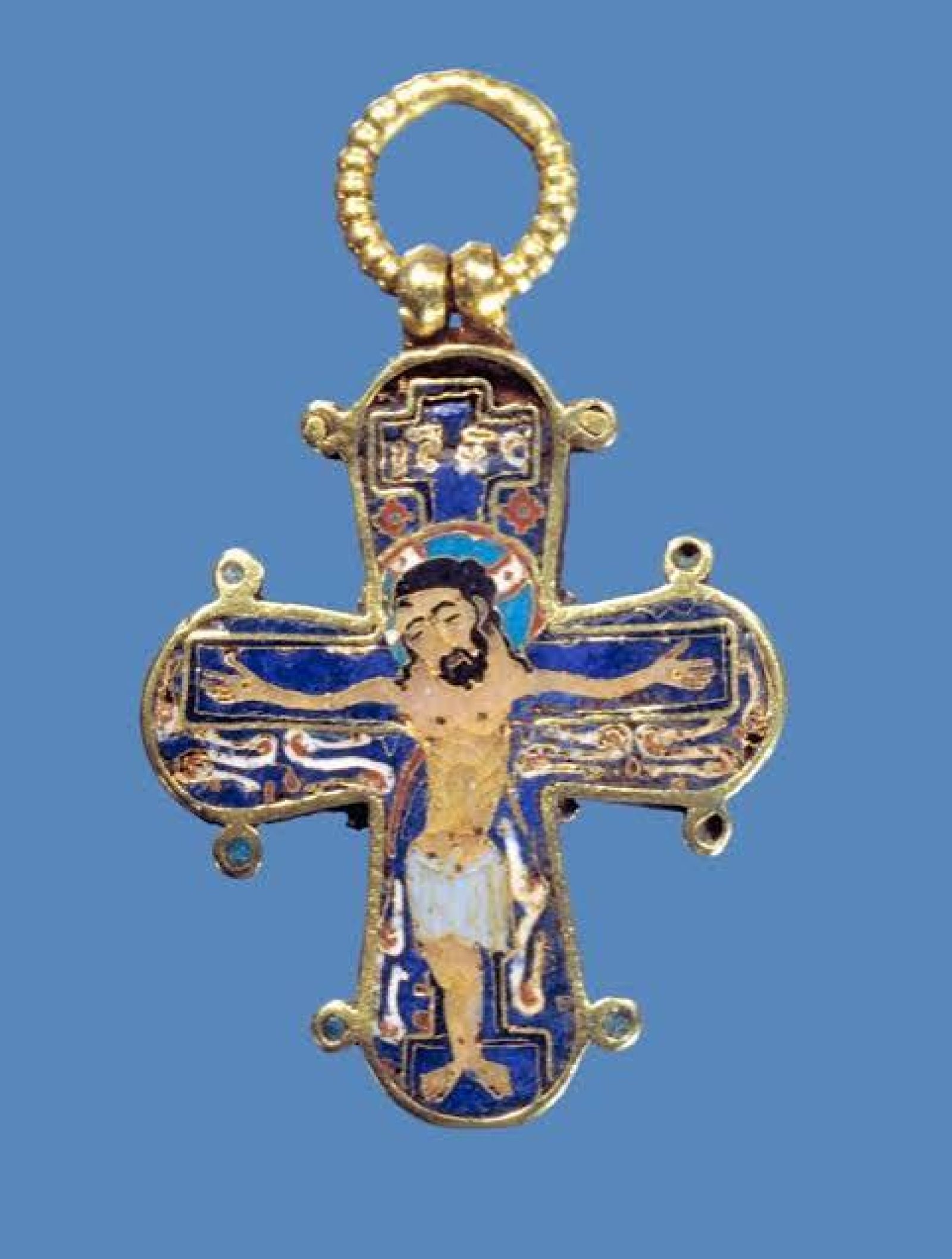
The Dagmar Cross became a Danish symbol of faith, protection, and family tradition.
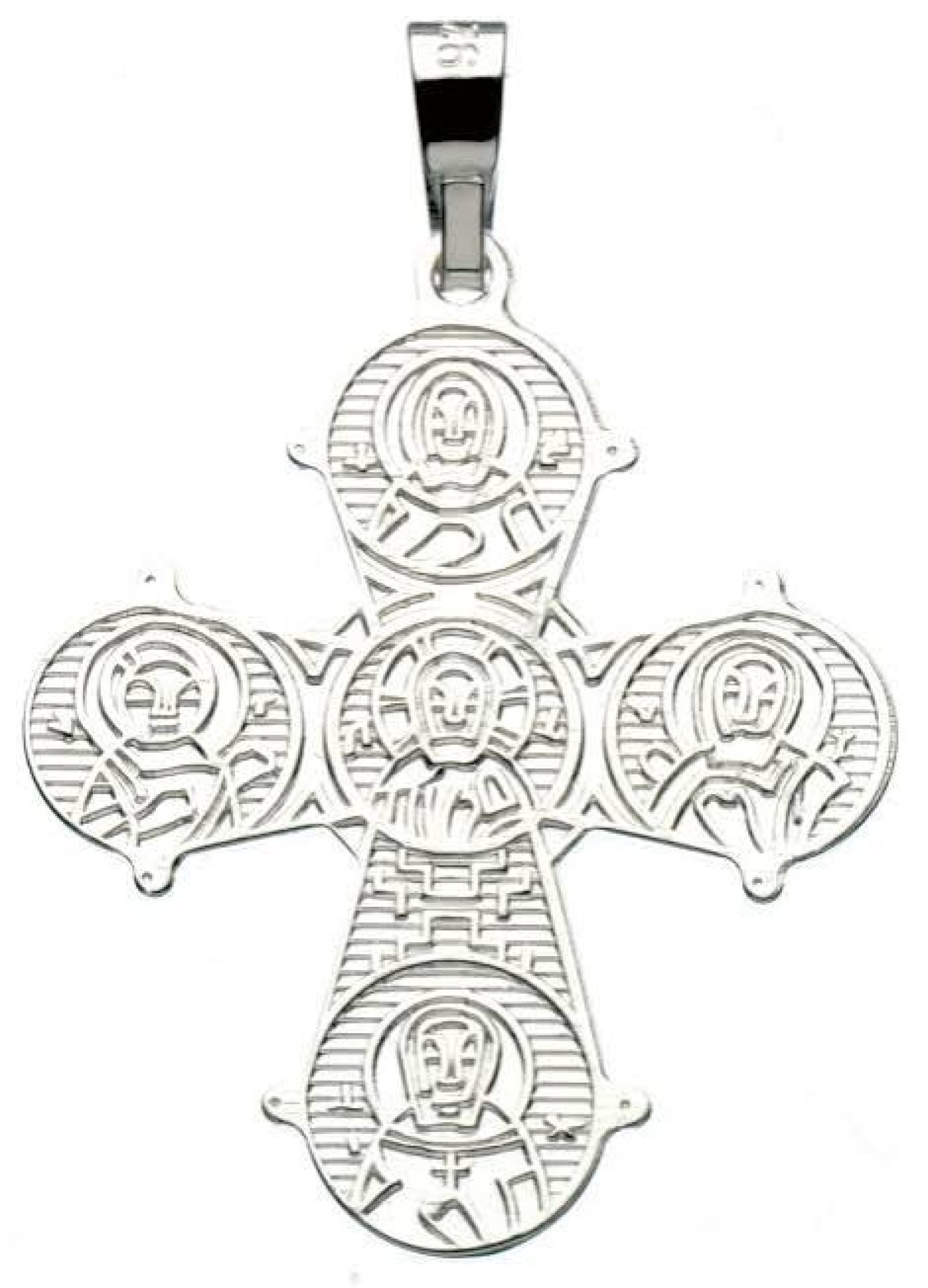
Modern Dagmar Cross jewelry keeps the medieval object connected to christenings, confirmations, weddings, and family gifts.
Gift Tradition
Over time, the Dagmar Cross found its way from royal history into everyday Danish life. Copies became treasured gifts for baptisms, confirmations, weddings, graduations, and other important milestones. Given with love and often passed from parent to child, the cross came to symbolize faith, family, and the enduring bonds between generations.
Its popularity grew even further during the nineteenth century as Denmark embraced renewed interest in its medieval past. In 1863, King Frederik VII commissioned a copy of the original cross, and that same year Princess Alexandra wore a Dagmar Cross when she married the future King Edward VII of Great Britain. The royal connection introduced the cross to a wider audience while strengthening its place as one of Denmark's most beloved heirlooms.
Today, the Dagmar Cross remains one of the country's most meaningful gifts. Whether worn every day or reserved for life's special occasions, it serves as a reminder that the most treasured traditions are those shared from one generation to the next.
Folk Ballad and Memory
The stories remembered Queen Dagmar not for military victories or political power, but for kindness. Her compassion became the quality generations admired most.
Her early death added a sense of sorrow that gave the ballads lasting emotional power. The legend became one of love, loss, and remembrance.
A small medieval cross grew into one of Denmark's most treasured family heirlooms, carrying Dagmar's name from one generation to the next.
Ballads, books, artwork, and family traditions preserved Dagmar's memory long after her lifetime, reminding us that stories often shape history as much as historical records.
From Queen Dagmar's legend to Andersen's fairy tales and the customs of Christmas, Danish culture has been carried from one generation to the next through stories, celebrations, and family traditions.
Hans Christian Andersen Christmas Traditions Back to Learn Plan a visit