Featured
How the Mill Works
Not Just a Landmark
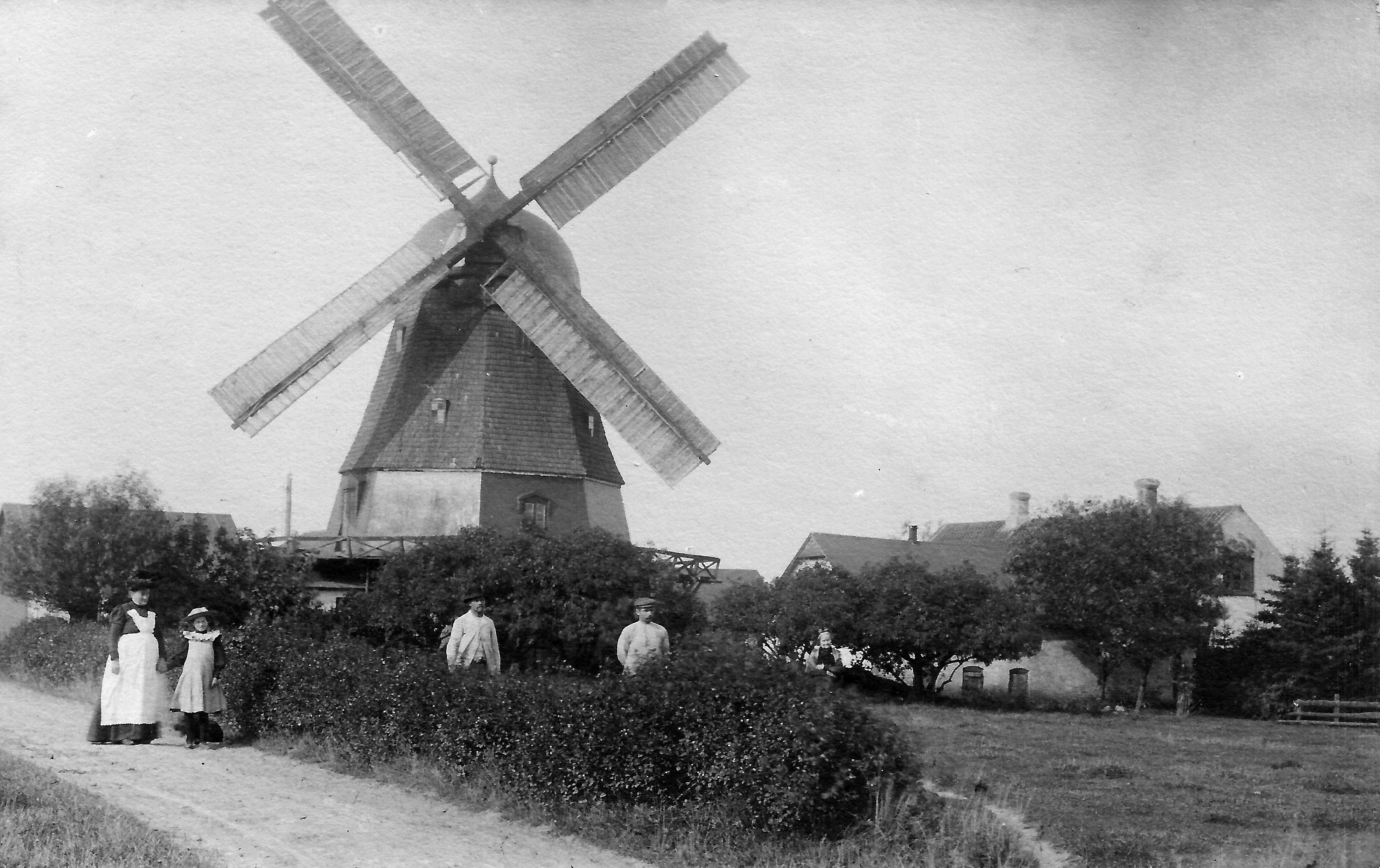
The Danish Windmill is beautiful from the outside, but its real story is inside. Every level of the mill was shaped around work: catching the wind, carrying power through timber and iron, lifting grain, turning stones, and producing flour.
Learning the parts gives visitors a clearer way to see the mill as the people who built and used it understood it: as a machine with a job to do.
Outside
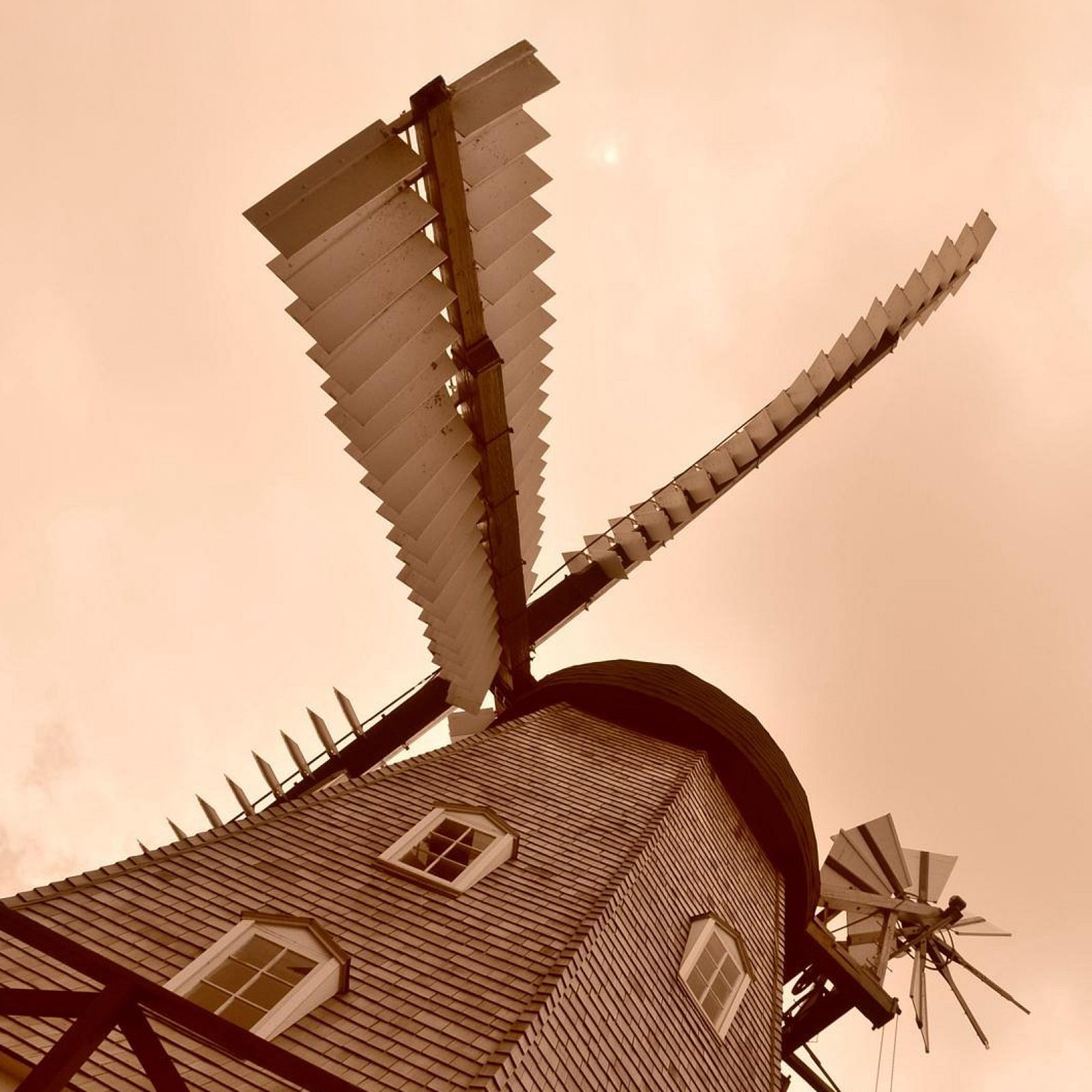
The sails are more than the Windmill's most recognizable feature. They are carefully designed to harness the power of the wind. Rather than acting like giant paddles, their angled surfaces create lift, much like the wing of an airplane. That lift pulls the sails into motion, turning the wind's energy into mechanical power.
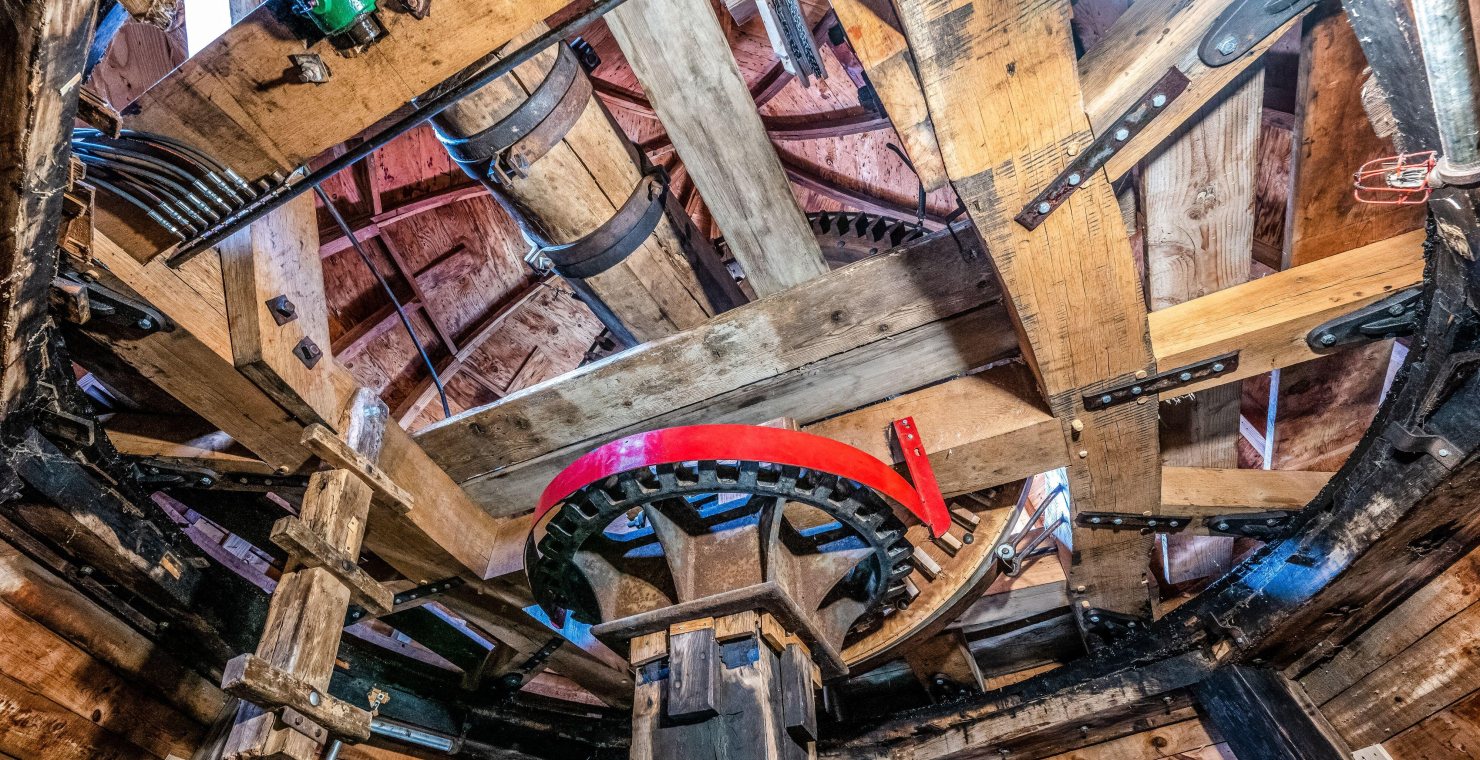
The rotation begins at the windshaft and travels through a series of massive wooden gears and shafts inside the mill. Each moving part transfers energy to the next until it reaches the millstones below. Standing inside the Danish Windmill, visitors can watch that journey unfold, seeing how an invisible force becomes useful work through craftsmanship, engineering, and a deep understanding of the natural world.
Inside
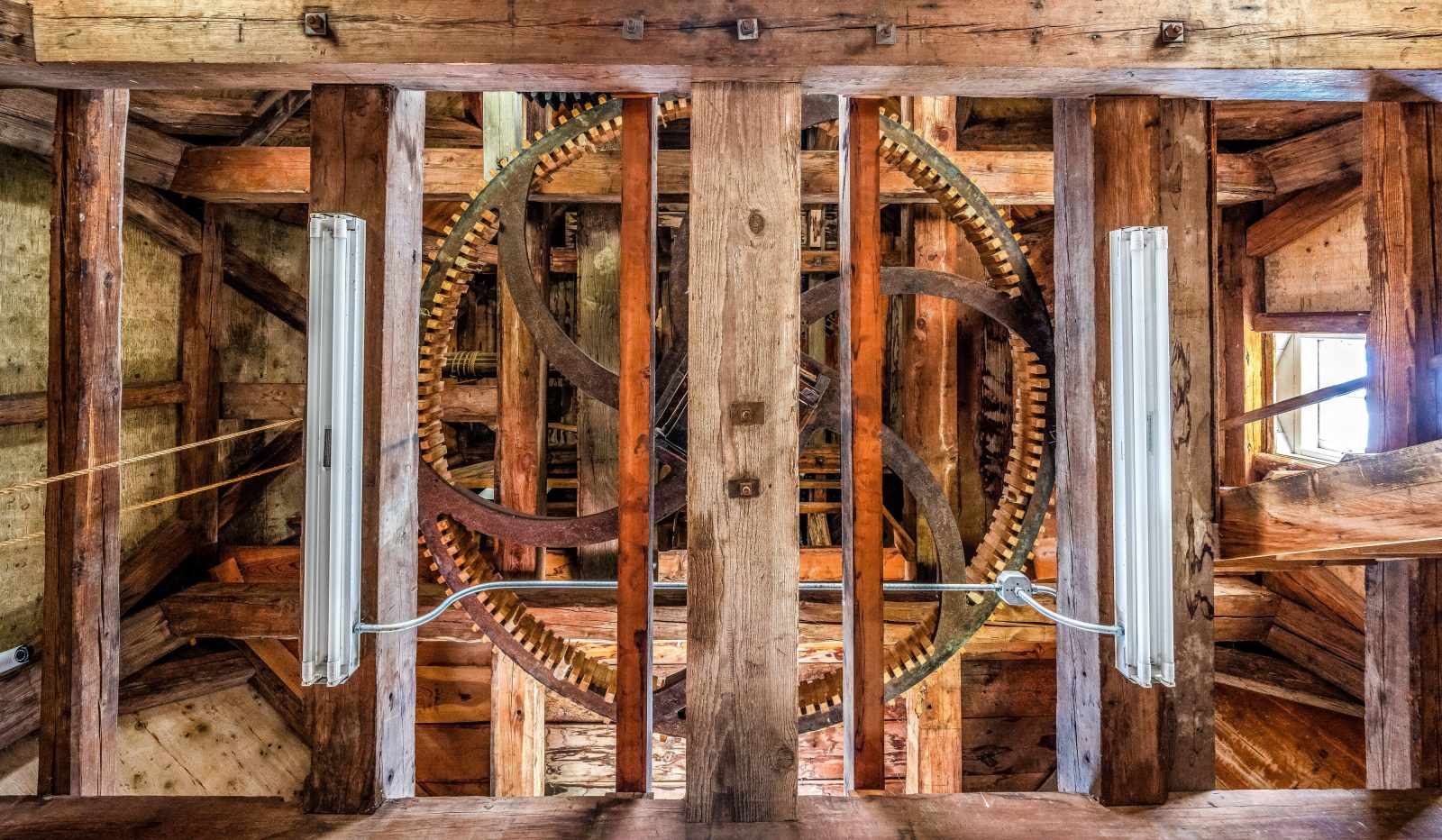
Inside the mill, motion has to travel. Shafts, gears, cogs, and wheels carry the force from one part of the building to another so the wind can do useful work.
The visible mechanism is both practical and beautiful. It shows historic craft, repeated repair, and the intelligence of a building designed around movement.
Grinding
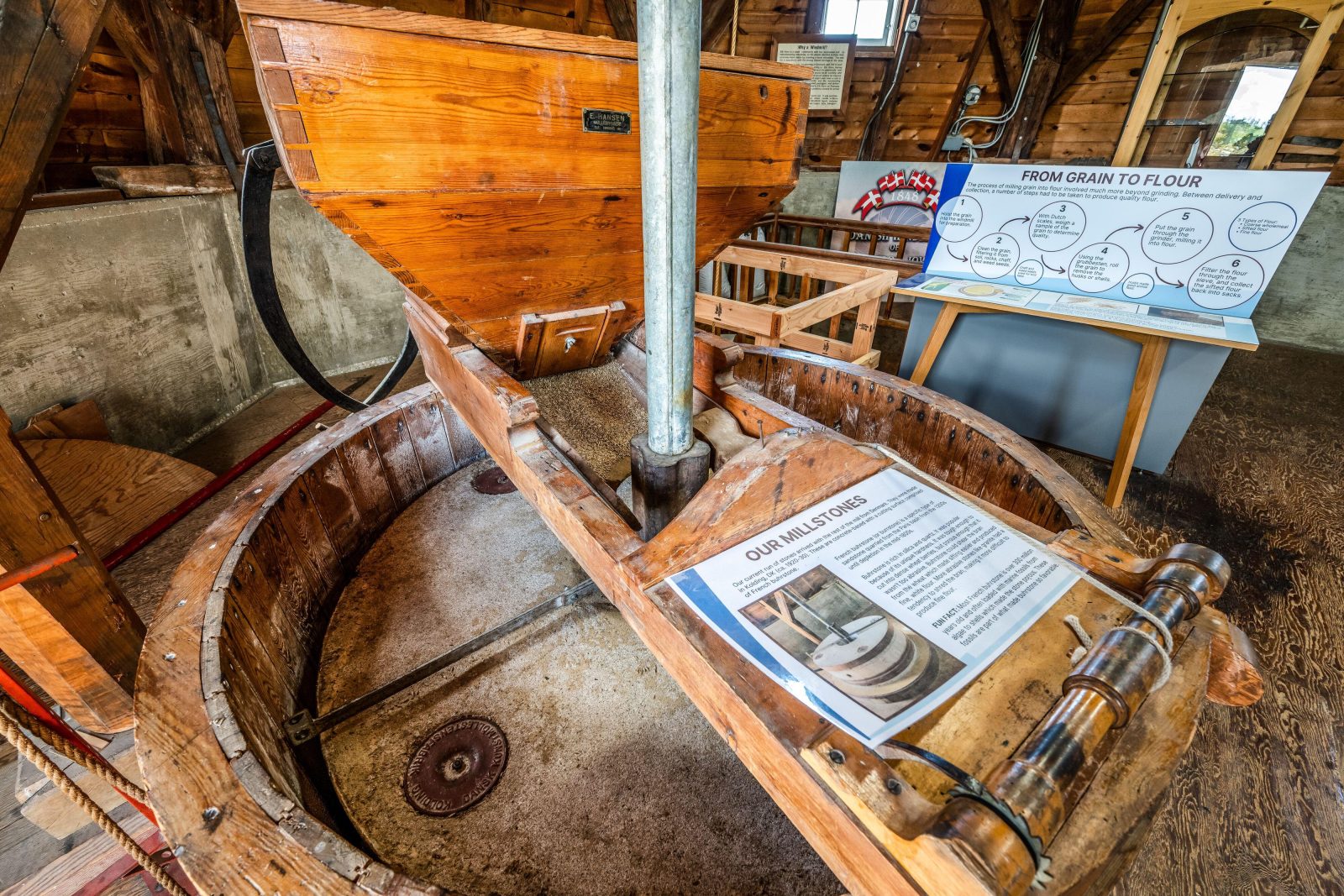
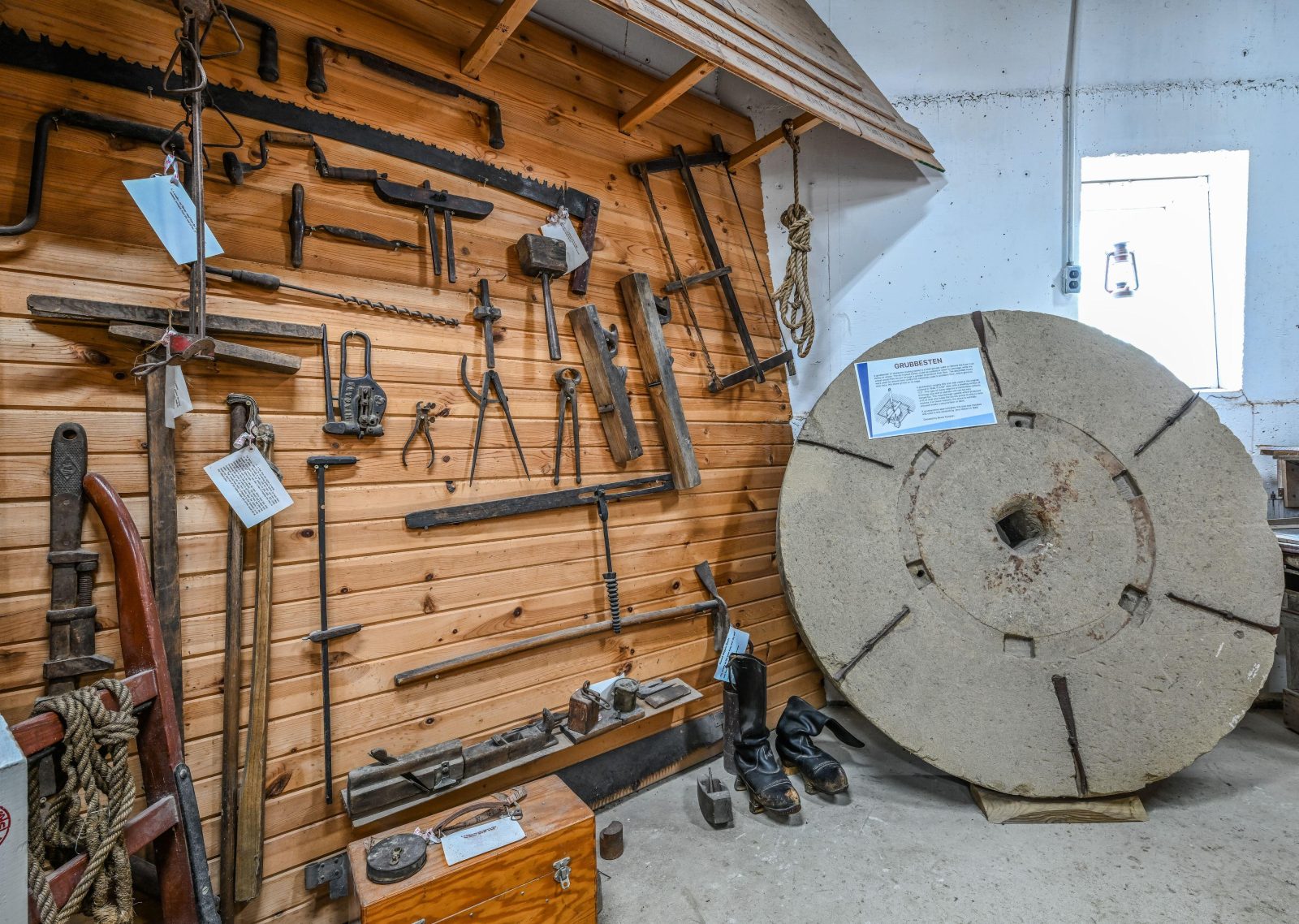
The mill's work comes together at the stones. Grain is moved, lifted, fed, and ground by parts arranged across several levels of the building.
A sack hoist, working rooms, millstones, and grain-handling areas show that the Windmill was built around process. Each part has a role, and together they turn wind into food.
Glossary
SHAWN PLEASE REVIEW
The large arms that catch the wind and begin the turning motion.
The upper portion of the mill associated with facing the sails into the wind.
The shaft that carries turning force from the sails into the mill.
A large wheel connected to the drive system; part of controlling and transferring motion.
Wooden and iron parts that mesh together to carry power through the mill.
The paired stones that grind grain into flour.
The container that helps feed grain toward the stones.
A lifting system that helps move sacks through the mill.
Come visit
You can study diagrams and labels, but nothing compares to watching the machinery work. When the wind is right, hundreds of handcrafted wooden components come alive in a remarkable demonstration of 19th-century engineering.
Keep it turning
Members, donors, volunteers, millers, and visitors all help keep this historic machine understandable, visible, and turning for the next generation.